
There's a version of this job where you show up, make things look good, and hand it off. Clean screens. Nice typography. A color palette that passes the vibe check. Everyone nods. The client is happy. You move on.

Pretty Doesn’t Convert
I've done that version. And I've watched those products quietly fail. Not because the design was bad but because it wasn't connected to anything. It was decoration. Pretty wallpaper on a house with a broken foundation.
Design that doesn't start with a business problem isn't really design. It's styling. And styling doesn't move numbers.
After working across multiple products, I've come to believe this firmly: every screen, every component, every empty state needs a reason one that ties back to something the user needs or the product is trying to achieve.

Three Layers. All Three Must Connect
Most teams jump straight to UI. The problem is, UI is where decisions show up not where they're made. There are three layers every product design runs through. Pull any one out and you're not building a product. You're building a facade. And facades don't grow.
- Strategy — The Foundation Why does this product exist? What problem is it actually solving? What does the user believe when it's working? These aren't brand questions they're design questions. Every layout decision traces back to whether the answer to these is clear.
- User Experience — The Journey How does a human encounter that problem, move through it, and arrive somewhere useful? Every friction point is a design failure not a UX failure, a design failure. Which means it's fixable, testable, and measurable.
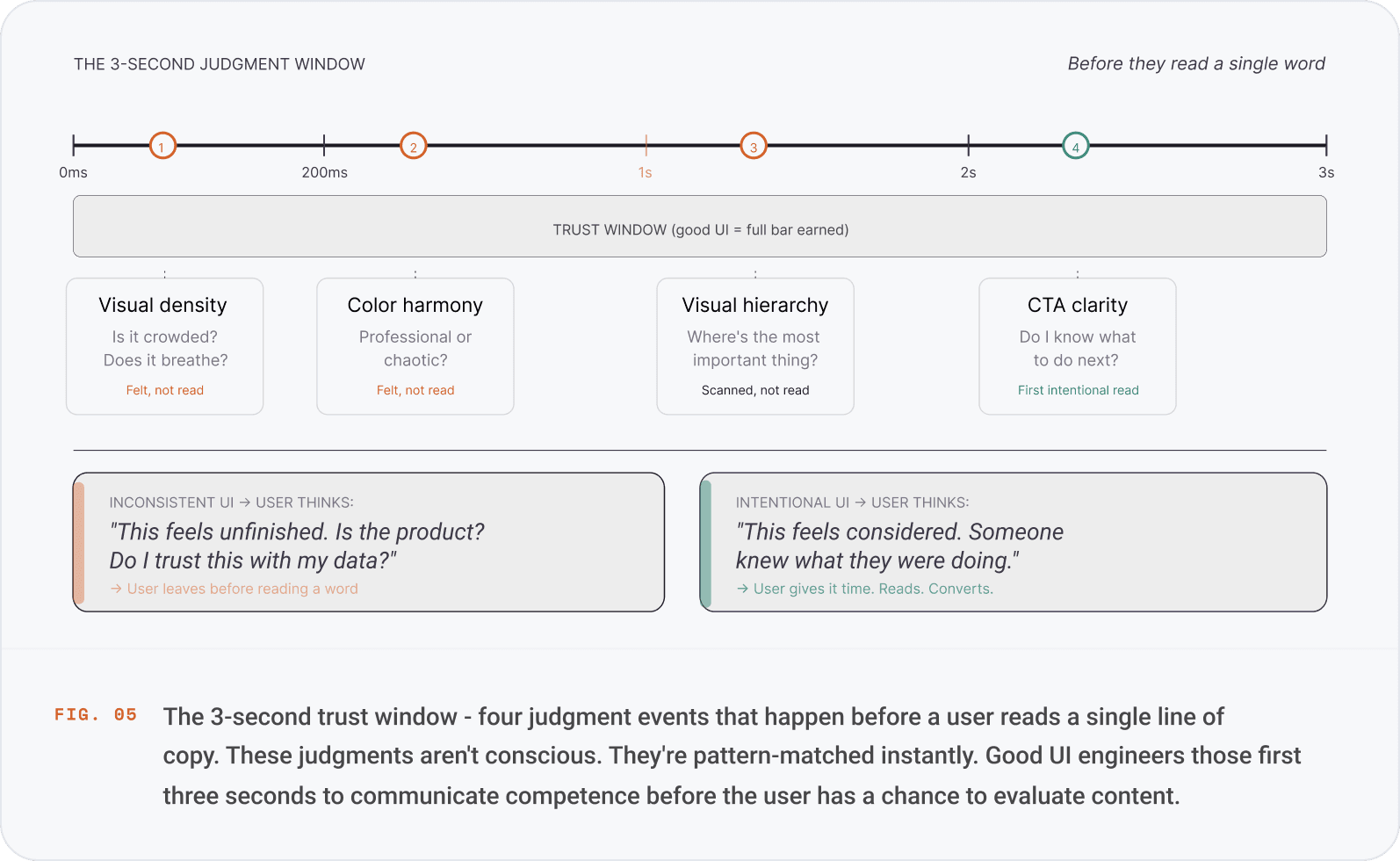
- User Interface — The Resolution How do you resolve the experience in a way that earns trust in the first 3 seconds? Visual design is the last layer, not the first. When treated as the first layer, every subsequent decision is built on sand.
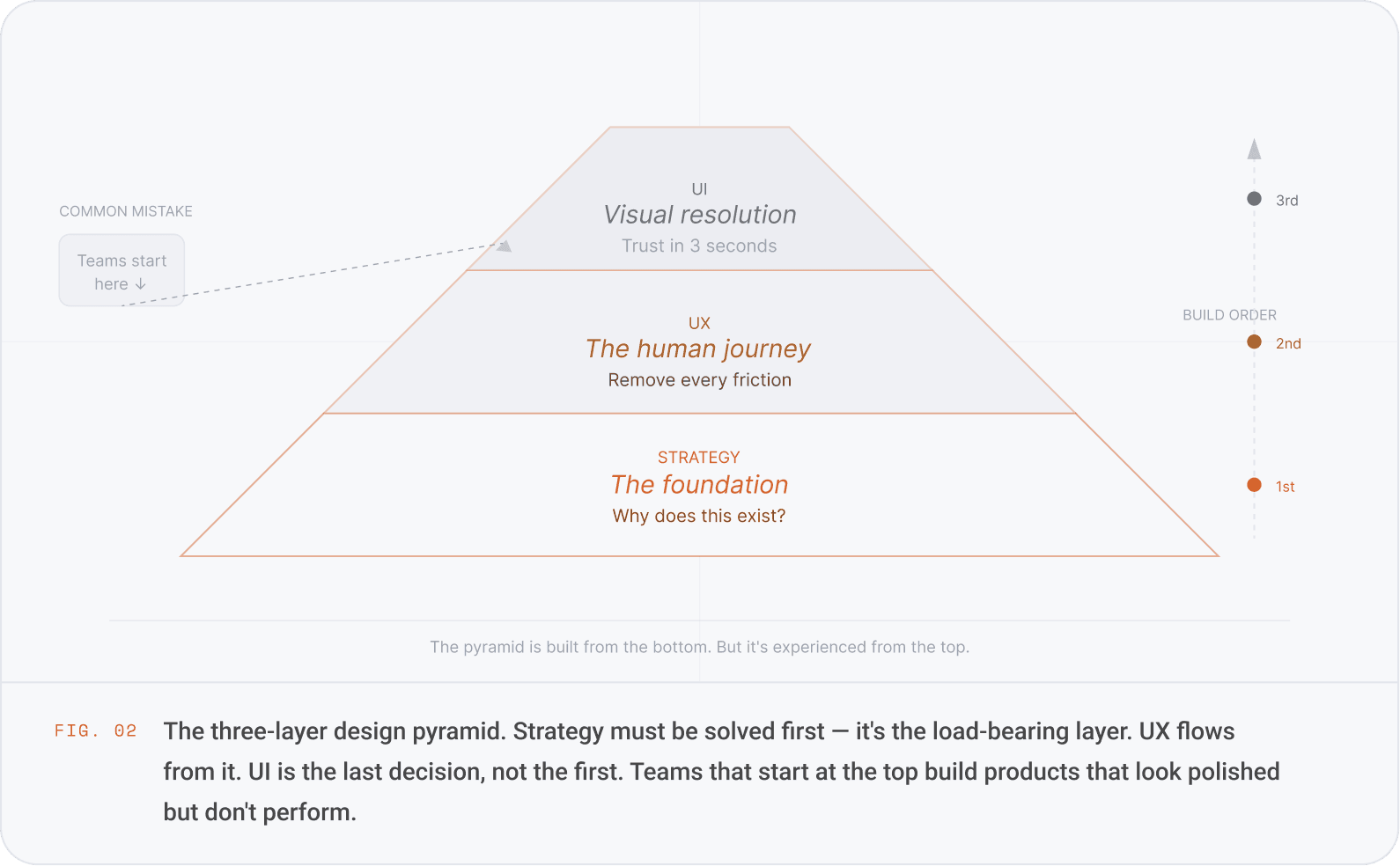
What this means in practice
When a team asks me to "just jump into wireframes," I know we're about to build the wrong thing beautifully. The conversation needs to go one floor down before anything gets drawn.
The Flow Is the Design
Design starts when you map what the user is actually trying to do and where the system might fail them. Most products don't lose people on the homepage. They don't lose them in checkout either.
They lose them in the invisible gap right after they first arrive the moment between "I'm in" and "I know what to do." That gap almost never shows up in a brief. You only find it when you trace the journey.
I've seen onboarding flows where users drop off not because the process is complex, but because it was unclear what they'd get at the end. One line of clarity often fixes what five screens of UI couldn't.

One line of clarity often fixes what five screens of UI couldn't.
Wireframes Are Conversations, Not Deliverables
The best wireframe reviews are messy. When something looks unfinished, people feel like they can still question it. They push back. They explore. They challenge assumptions.
When it looks polished, they approve it to be polite and the structural problems get shipped. By the time you're applying visual design, the questions of what and why should already be answered.
UI isn't where decisions are made. It's where those decisions are made clear.

If something looks better at low fidelity than it does at high fidelity, the problem isn't the color choices. The underlying logic is wrong. More polish makes it harder to see the failure — it doesn't fix it.
Where UI Earns Its Keep
Visual design matters. A lot. But it matters after the thinking. When the structure is right and the flow makes sense, good UI does something very specific: it creates trust.
Users make unconscious quality judgments within seconds of landing on a product. If the interface feels inconsistent, crowded, or unclear they assume the product is too. If it feels clean, intentional, and confident, they give it more time. More patience. More trust.
That's what good UI earns. Not admiration trust. Those are completely different things.
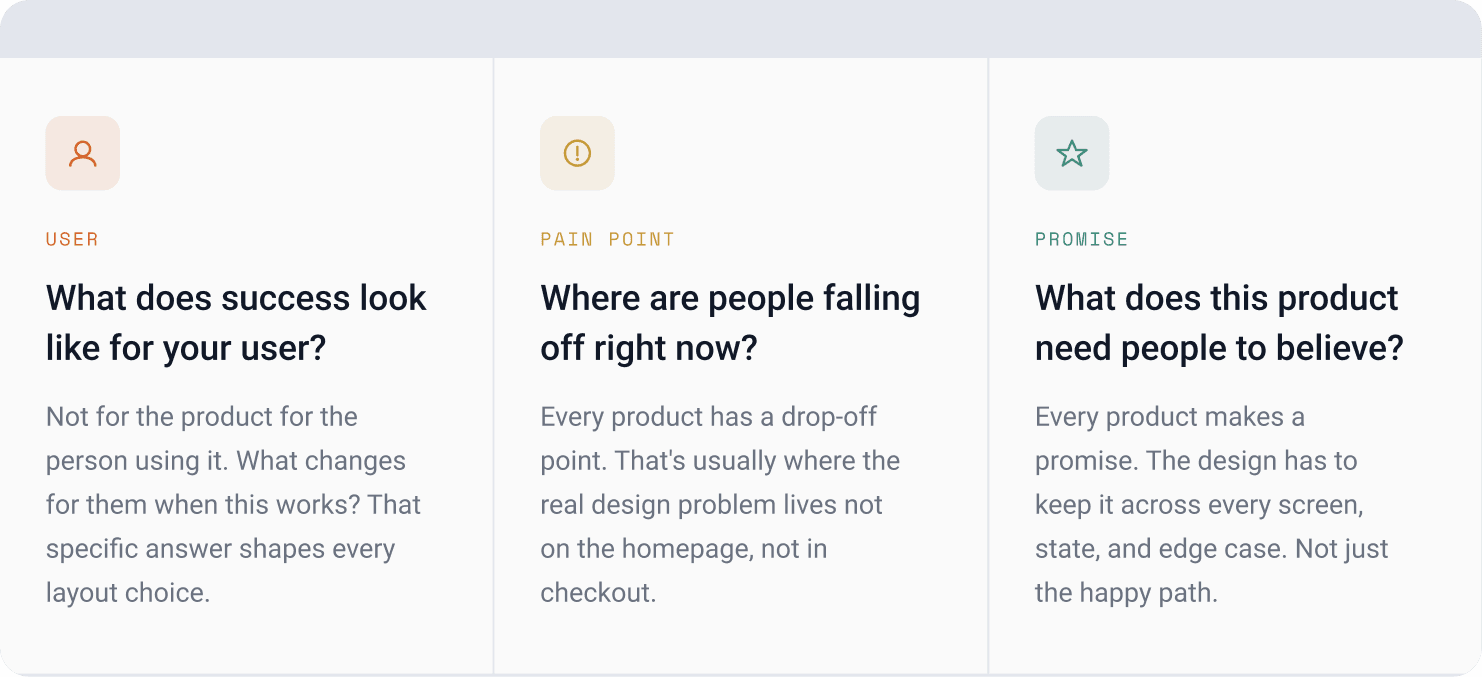
Three Questions Before Any Wireframe
Before opening any design file, I want answers to three things. If a client can't answer them yet, we're still in strategy and that's part of the work.
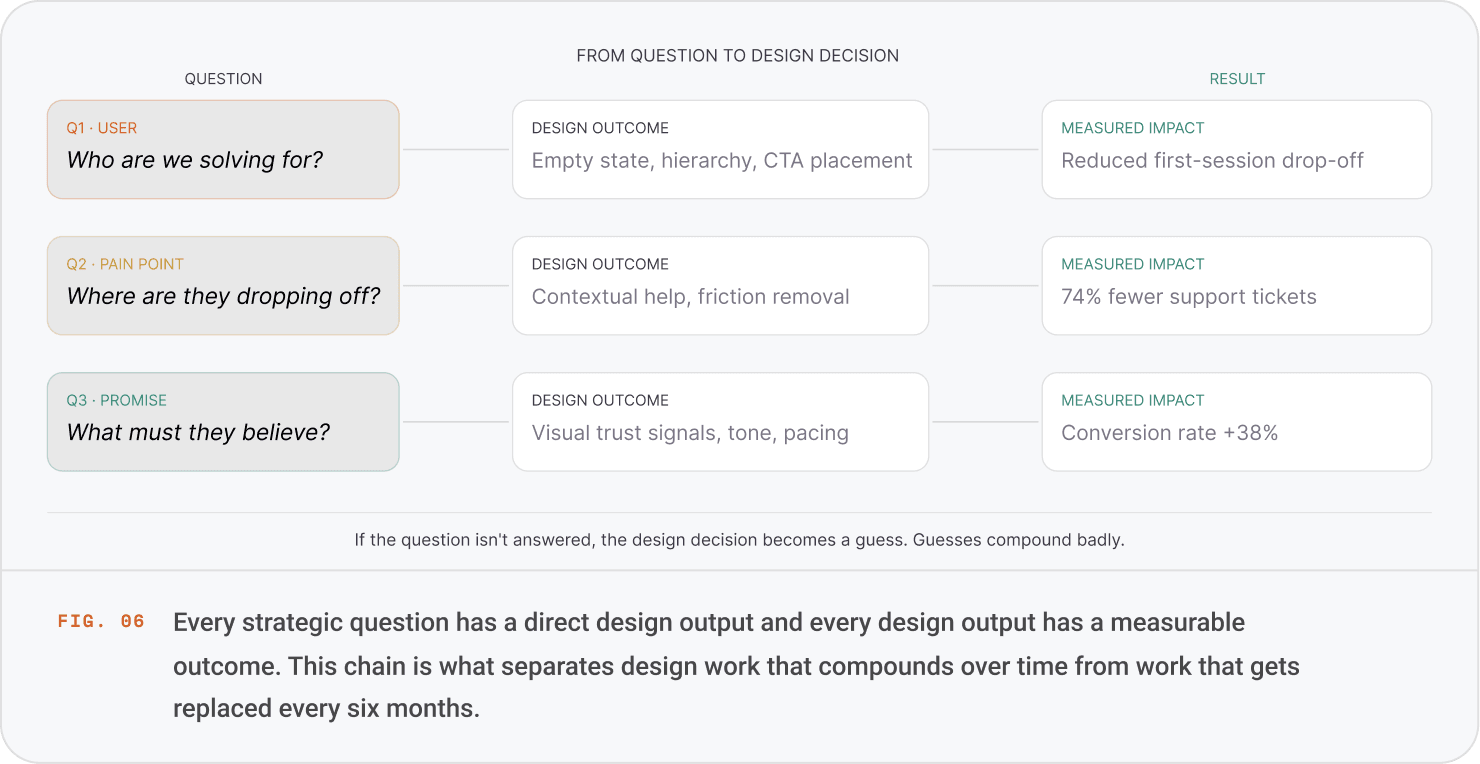
Things I’ve Learned the Hard Way
- The homepage is almost never the problem Users drop off inside empty states, halfway through onboarding, or at the moment they can't find the action they came for. Start there not at the top. The homepage gets 90% of the design attention and causes about 10% of the churn. The math doesn't work.
- Messy wireframes invite better feedback Unfinished work gets challenged. Polished work gets approved. And that's how bad decisions slip through. I deliberately keep early wireframes rough not because I'm lazy, but because the roughness is doing work. It signals: this is still a question, not an answer.
- Emotions arrive before information Users don't read interfaces they feel them first. Does this screen feel under control or overwhelming? That answer arrives before the first word is read. Design that doesn't account for emotional tone at the layout level is leaving its most powerful lever untouched.
- If you can't explain it, you can't defend it "It looks better" won't survive the next sprint. "It reduced confusion at this step because users were looking for X and we moved it here" will. Every design decision should be arguable from the user's behavior, not from a designer's preference. That's what makes design durable.

Closing Thought
At some point, every product has to answer a simple question: is it helping people move forward or just sitting there looking good? Because users don't stay for aesthetics. They stay when something works. When it makes sense. When it feels easy. If a product isn't growing, it's rarely a UI problem. It's a clarity problem. A flow problem. A thinking problem. And until that's fixed, no amount of polish will move the needle.
Share this article:

Sharon Derik


UI/UX Designer
UI/UX designer focused on clarity, flow, and reducing friction. Designing product experiences where every decision has a purpose and every screen supports user progress.